
- EMAIL: acco@africacore.org
Articles
Redefining Free Education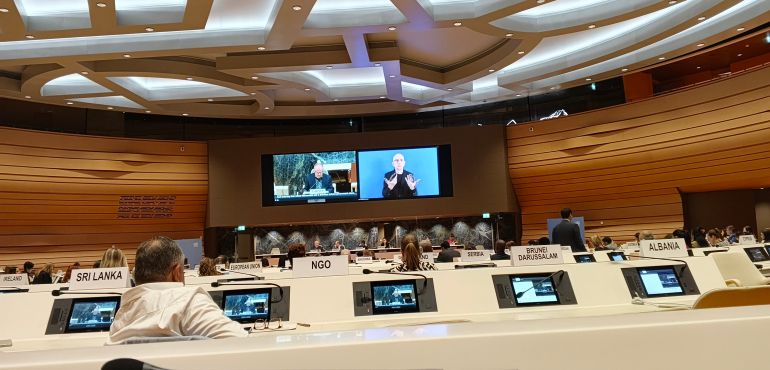
Redefining Free Education and the Demand for Rights to Right Education
- 06 September 2025
- Peter Adeleye
- Geneva, Switzerland
At the just concluded open-ended intergovernmental working group on an optional protocol to the Convention on the Rights of the Child on the rights to early childhood education, free pre-primary education, and free secondary education held at the United Nations Office in Geneva, Switzerland, I shared my concerns about the focused topic and how experts in the room needs to redefined what free education should be in order to help the nations of the world especially the developing and underdeveloped countries.
There's a serious need to redefining what free should be. Instead of asking the nations of the world for a free education or create an alternative path, we should ask the member states for free, quality education from pre-primary to secondary education. To some extent, free education in some countries is just a block of classrooms, tables, chairs and teachers that are not really motivated. I urged those countries that have standardised education, aid, loan and/or fund developing countries to itemised what sort of education they are supporting. If in their countries, free education is a good building structure with needed and necessary facilities, nothing should stop them asking for the same from any countries they are giving funding support to.
Education should not suffer where defense and security receives highest priority.
In addition, member states, not just the developing or underdeveloped countries this time around should focus more on education and fund free education appropriately, they should stop paying lip service to free education and funds such adequately and up to secondary education. Education is being neglected in every part of the world. The nations of the world are now investing heavily on defense, wars and weapons, neglecting the most potent force and the greatest weapon of defense, which is education. Reading through the news, information from world defense and not to analyse the budget of the nations of the world, it is to be noted that defense budgets are yearly more than one hundred percent increase while that of the education is getting decreased year in and out. Political leaders, policymakers and those in charge of education in nations of the world should be more committed to provide free, quality education for their people and stop relying on aids from outside of their domains to fund free, quality education for their people.
To cap it up, efforts should be made to fund girls education and create alternative path to build up and develop their capabilities in order to ensure they all contribute to social, economic and political development of their nations. Education should not suffer where defense and security receives highest priority.
Peter Adeleye writes from Geneva, Switzerland.